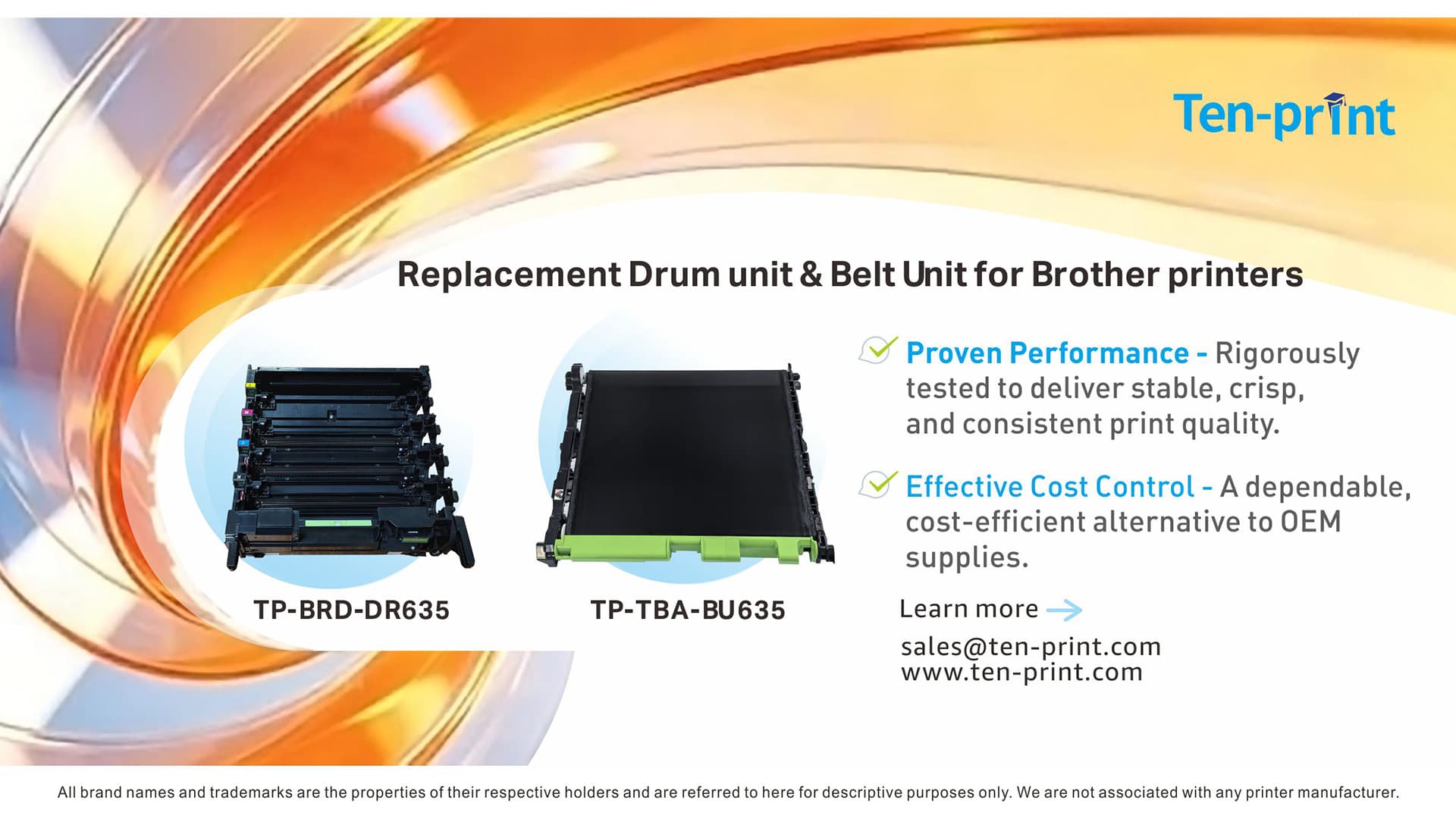
Ten-print launches new replacement drum units, impacting the e-waste and toner cartridge recycling sectors.
Ten-print introduced new replacement drum units for Brother printers on September 24, 2026, intensifying competition in the aftermarket consumables sector and posing new considerations for e-waste recyclers.
This expansion by Ten-print directly impacts the lifecycle management of printer consumables, specifically drum units, and will influence material recovery strategies for e-waste processors handling end-of-life imaging equipment.
Aftermarket Growth Challenges OEM Recycling Programs
The aftermarket for printer consumables, including drum units, continues its rapid expansion, driven by lower consumer costs and increased availability of third-party alternatives. This growth often diverts used cartridges and components from OEM-sponsored recycling programs, complicating closed-loop material recovery efforts and increasing the volume of non-OEM waste entering the general e-waste stream.
- Ten-print's new line targets Brother printer models, a significant market share holder in both consumer and business printing.
- Aftermarket drum units typically utilize a mix of virgin and recycled plastics, but their composition can vary significantly from OEM specifications, complicating automated sorting.
- The average lifespan of a drum unit is approximately 12,000 to 30,000 pages, leading to a consistent waste stream that recyclers must manage.
- Growth in aftermarket sales often corresponds with a decrease in returns to OEM-specific recycling channels, as third-party vendors rarely offer comparable take-back programs.
Compliance Timelines Tighten for E-Waste Handlers
E-waste handlers face increasing pressure to adapt their processing lines for the diverse material compositions found in aftermarket components. Unlike standardized OEM products, third-party drum units can present variations in plastic types, metal alloys, and residual toner, demanding more sophisticated sorting and separation technologies. This variability directly affects commodity purity and the economic viability of recycling these specific components. Operators must invest in advanced spectroscopic identification and mechanical separation to maintain high-value material streams, or risk downcycling valuable plastics and metals.
What This Means for Recyclers
Recyclers must anticipate a continued diversification in the material stream from printer consumables, necessitating investments in advanced sorting technologies capable of distinguishing varied plastic polymers and metal grades. Proactive engagement with aftermarket manufacturers could establish take-back programs or standardized material specifications, improving end-of-life recovery. Without such measures, the economic burden of processing increasingly complex e-waste will shift further onto recyclers, impacting profit margins and material recovery rates.