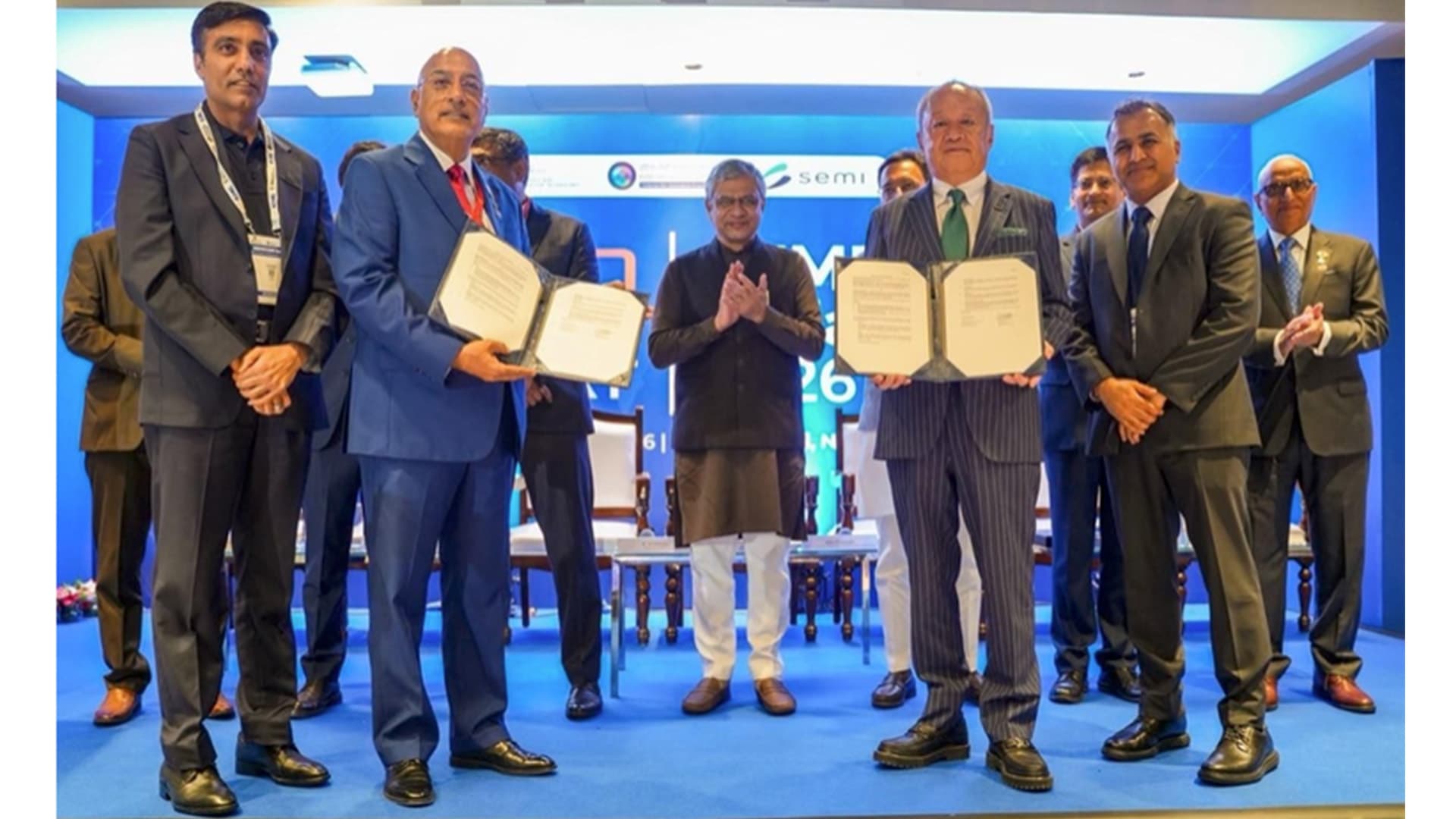
Fujifilm and Tata Group partner to establish a semiconductor manufacturing ecosystem in India, impacting global tech supply chains.
Fujifilm and India's Tata Group have signed a Memorandum of Understanding (MoU) to jointly develop a semiconductor manufacturing ecosystem within India.
This strategic alliance signals a significant shift in global semiconductor production, aiming to reduce reliance on East Asian supply chains and establish India as a key player in high-tech manufacturing. The initiative will directly affect companies involved in materials sourcing, component manufacturing, and ultimately, the end-of-life processing of complex electronics.
India's Semiconductor Ambitions Reshape Global Supply Chains
The collaboration comes amidst a global push to diversify semiconductor production, driven by geopolitical tensions and supply chain vulnerabilities exposed during the COVID-19 pandemic. India, under its ambitious "Make in India" initiative, has earmarked billions in incentives to attract semiconductor fabrication plants and associated industries, aiming to create a vertically integrated ecosystem.
- The Indian government has approved a $10 billion incentive scheme to bolster domestic semiconductor manufacturing.
- Tata Electronics has already committed to establishing a large-scale semiconductor assembly and test facility in Assam, India.
- Fujifilm will contribute its expertise in advanced materials, including photoresists, developers, and CMP slurries, critical for semiconductor fabrication.
- This partnership specifically targets the production of compound semiconductors and advanced packaging solutions.
- Initial operations are expected to commence within the next 3-5 years, with full-scale production ramping up thereafter.
Operational Implications for E-Waste and ITAD Sectors
The establishment of a robust semiconductor manufacturing base in India will have profound implications for the e-waste and ITAD sectors globally, particularly as the volume and complexity of electronic devices increase. Enhanced domestic production will mean more localized sourcing of materials but also a future increase in domestic e-waste streams containing advanced components. ITAD operators will eventually face a greater influx of devices manufactured with these Indian-produced semiconductors, requiring updated dismantling and material recovery protocols. The shift could also influence global commodity prices for rare earth elements and other critical minerals used in semiconductor fabrication, impacting the economic viability of recovery operations.
What This Means for Recyclers
Recyclers must prepare for a future where semiconductor manufacturing is more geographically diverse. This partnership specifically points to increased demand for critical materials and a potential future increase in high-value e-waste from India. Operators should monitor global trends in semiconductor material demand and consider investments in advanced sorting and recovery technologies capable of handling increasingly complex electronic components. Proactive engagement with manufacturers and policy makers in emerging semiconductor hubs like India will be crucial for developing effective end-of-life solutions.