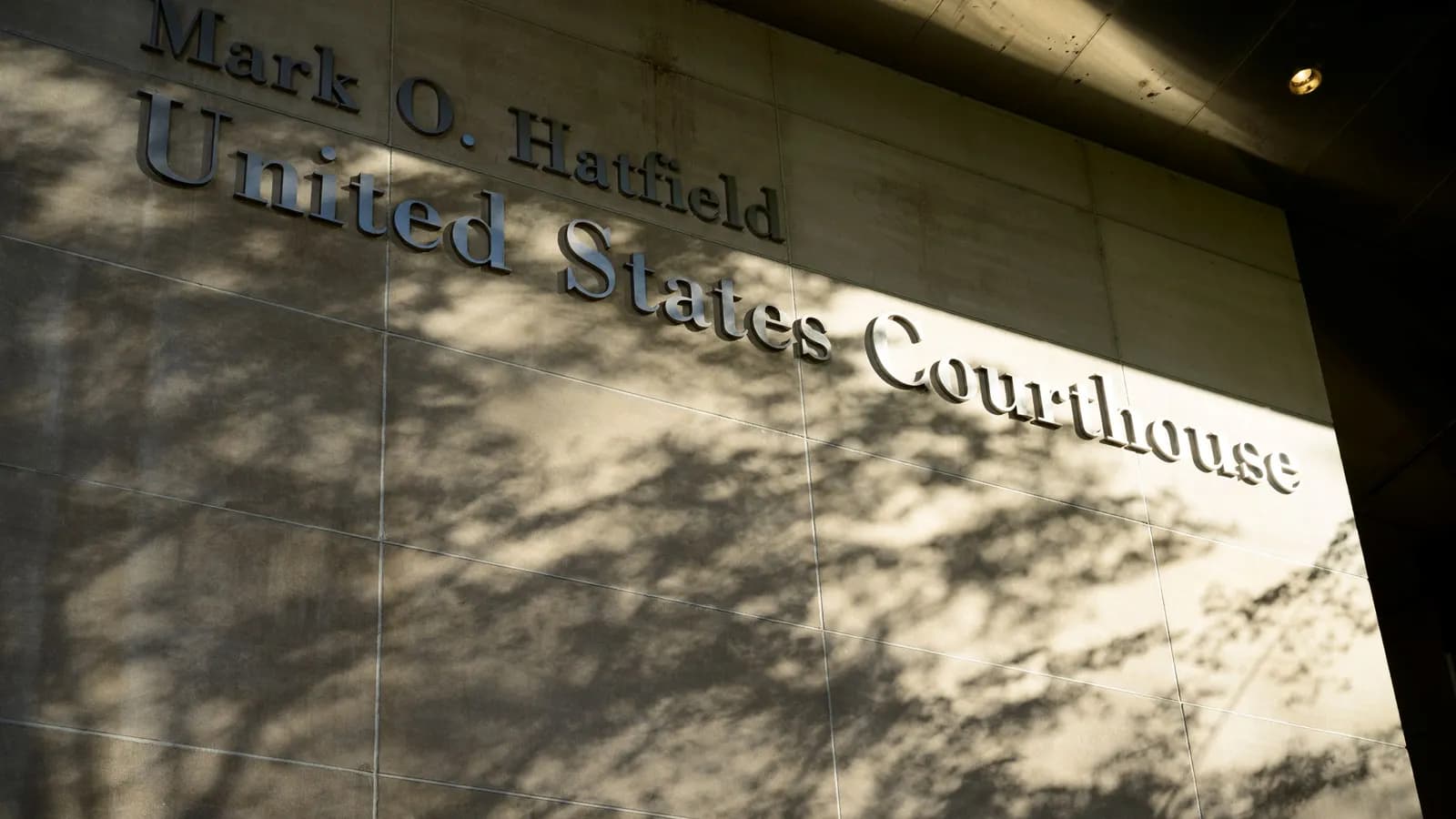
Oregon's EPR law for packaging and paper products upheld by federal court, setting precedent for producer responsibility.
A federal judge in Oregon has ruled that the state's Extended Producer Responsibility (EPR) law for packaging and paper products does not violate the U.S. Constitution, rejecting challenges from industry groups.
This decision clears a significant legal hurdle for Oregon's ambitious recycling modernization program, establishing a precedent that could influence the legal viability of similar EPR schemes nationwide and directly impacting producers, haulers, and material recovery facilities (MRFs) operating within the state.
Oregon's EPR Framework Withstands Constitutional Scrutiny
The lawsuit, filed by the American Beverage Association (ABA) and the American Forest & Paper Association (AF&PA), contended that the law violated the Commerce Clause and the First Amendment. U.S. District Court Judge Michael W. Mosman, however, found no constitutional infirmity, affirming the state's right to implement the program. This ruling ensures the Oregon Department of Environmental Quality (DEQ) can proceed with the full implementation of the EPR program, which shifts the financial and operational burden of recycling packaging and paper products from ratepayers to producers.
- Oregon's EPR law, Senate Bill 582, passed in 2021.
- The program requires producers to fund and manage a statewide recycling system, aiming for a 25% increase in collection rates by 2030.
- The lawsuit specifically challenged the law's fee structure and its requirement for producers to educate consumers on recycling.
- The Oregon DEQ is currently developing rules and establishing a Producer Responsibility Organization (PRO) to administer the program.
- Program implementation is slated for July 1, 2025, with initial producer fees expected to cover system upgrades and operational costs.
Producer Responsibility Organizations (PROs) Face Heightened Operational Demands
The court's decision places immediate pressure on the nascent Producer Responsibility Organization (PRO) tasked with managing Oregon's system. This entity must now accelerate its operational planning, including fee collection mechanisms, infrastructure investment strategies, and educational outreach programs. Producers, through their PRO, will become directly responsible for contracting with haulers and MRFs, dictating material specifications, and ensuring market development for recycled content. This fundamentally alters the financial flows and operational control within Oregon's recycling supply chain, moving away from municipal oversight.
What This Means for Recyclers
Recycling operators in Oregon can expect significant shifts in funding streams and material handling requirements. MRFs will likely see investments in new equipment and processing capabilities, driven by PRO-mandated improvements and higher recycling targets. Haulers will transition from municipal contracts to PRO-negotiated agreements, potentially standardizing collection practices statewide. Operators should prepare for increased scrutiny on material quality and reporting, as PROs will demand greater accountability to meet their legal obligations and achieve the ambitious recycling rates stipulated by SB 582. The outcome also signals a potential blueprint for other states considering similar legislative frameworks, solidifying the trend towards producer-funded recycling systems.