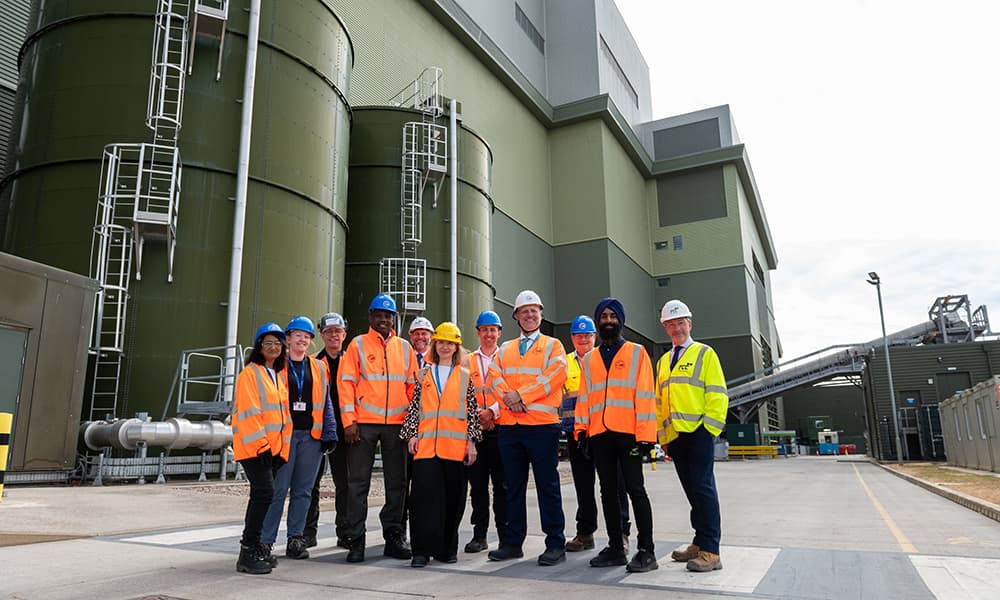
FCC Environment's Greatmoor EfW facility marks a decade of operation, processing 300,000 tonnes annually for Buckinghamshire.
FCC Environment’s Greatmoor Energy from Waste (EfW) facility in Buckinghamshire marked ten years of continuous operation, processing 300,000 tonnes of non-recyclable waste annually for Buckinghamshire Council.
This milestone underscores the critical role EfW facilities play in diverting waste from landfills and contributing to regional energy grids, directly impacting waste management strategies and infrastructure investment decisions for local authorities and private operators across the UK.
Greatmoor’s Decade of Waste-to-Energy Contribution
The Greatmoor facility, developed under a 30-year Private Finance Initiative (PFI) contract between FCC Environment and Buckinghamshire Council, commenced operations in 2016. Over its decade of service, the plant has consistently processed residual waste, generating enough electricity to power 40,000 homes annually and offsetting significant carbon emissions by avoiding landfill disposal.
- The facility processes approximately 300,000 tonnes of residual waste per year.
- It generates 22 megawatts of electricity, sufficient for 40,000 households.
- The project represented an initial investment of £200 million.
- Greatmoor has diverted over 2.5 million tonnes of waste from landfill since 2016.
- The facility employs approximately 40 full-time staff, contributing to local employment.
Operational Efficiency and Environmental Impact
Greatmoor's operational model focuses on thermal treatment, converting residual municipal solid waste into steam to drive a turbine for electricity generation. This process not only reduces the volume of waste requiring disposal by up to 90% but also recovers energy that would otherwise be lost. The plant operates under stringent environmental permits regulated by the Environment Agency, ensuring emissions remain within legal limits. This consistent performance provides a blueprint for other regions considering similar long-term waste management solutions, impacting decisions on new EfW plant construction and existing facility upgrades.
"Greatmoor has been a cornerstone of Buckinghamshire's waste strategy for a decade, demonstrating the effectiveness of EfW in delivering both environmental and energy security benefits," stated a spokesperson for FCC Environment. "Our partnership with Buckinghamshire Council exemplifies successful long-term collaboration in sustainable waste management."
Wider Industry Implications for Waste Management
The success and longevity of facilities like Greatmoor influence policy discussions around waste hierarchy and energy recovery. With increasing pressure to reduce landfill reliance and meet renewable energy targets, EfW plants offer a proven solution for non-recyclable materials. This impacts investment trends in waste infrastructure, with a continued focus on advanced thermal treatment technologies. For waste management companies, it reinforces the need for robust operational reliability, compliance with evolving environmental regulations, and effective community engagement to secure social license for such large-scale projects.
What This Means for Recyclers
For recycling operators, the continued prominence of EfW facilities like Greatmoor signifies a clear delineation in the waste stream: materials that cannot be economically or technically recycled will increasingly be directed towards energy recovery rather than landfill. This clarifies the market for residual waste, potentially stabilizing gate fees for non-recyclables. Recyclers must continue to innovate in material separation and processing to maximize diversion rates for valuable commodities, leaving a cleaner, higher-quality feedstock for EfW plants. Operators should monitor regional waste management plans and energy policy shifts, as these directly influence the long-term viability and expansion of both recycling and energy recovery infrastructure, impacting material flow and market dynamics.