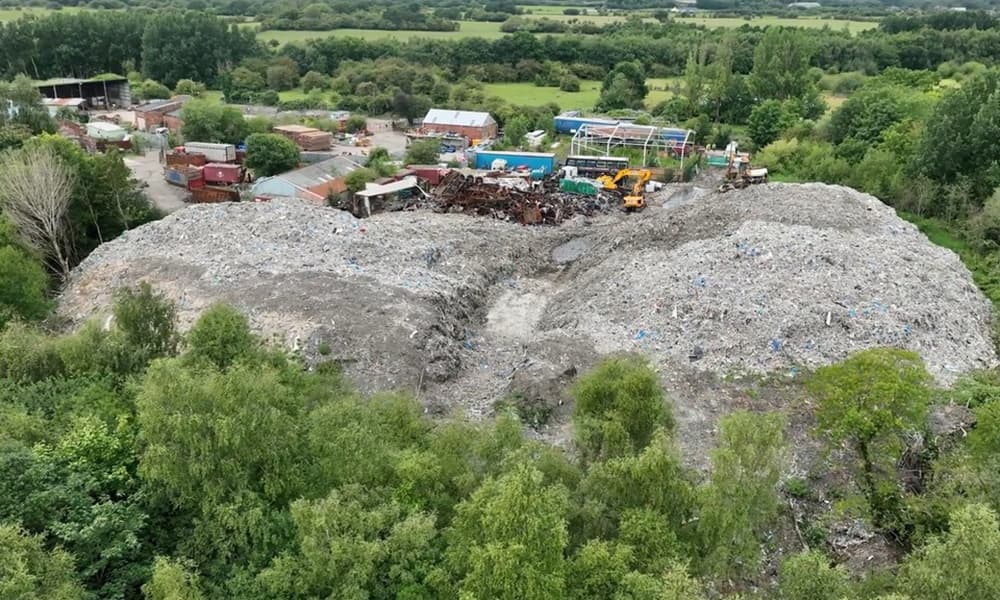
Waste crime disruptions are up, impacting recycling operations and increasing regulatory scrutiny on material handling.
The Joint Unit for Waste Crime (JUWC) reported 111 disruptions to illegal waste operations during the 2025–26 fiscal year, signaling intensified enforcement against illicit material flows.
This aggressive action directly impacts legitimate recycling and waste management businesses by disrupting supply chains, altering competitive dynamics, and increasing the regulatory burden on all operators to prove compliance and material provenance.
Waste Crime Enforcement Intensifies Across UK
The JUWC, a multi-agency task force, has significantly ramped up its interventions, targeting unlicensed facilities, illegal dumping, and fraudulent waste carriers. Their efforts aim to level the playing field for compliant businesses and prevent environmental damage, but also introduce new complexities for material sourcing and disposal.
- JUWC conducted 42 site inspections resulting in immediate enforcement actions.
- Authorities issued 28 fixed penalty notices for various waste offenses.
- The unit seized 17 vehicles suspected of involvement in illegal waste transport.
- Investigations led to 6 arrests linked to organized waste crime syndicates.
Compliance Burdens Rise for Legitimate Operators
Increased enforcement pressure means legitimate recyclers and waste handlers face heightened scrutiny regarding their due diligence processes. Operators must demonstrate robust checks on their waste streams, from origin to final disposition, to avoid association with illicit activities. This includes verifying carrier licenses, site permits, and end-of-life documentation for all materials, particularly those prone to illegal dumping or export.
Businesses failing to implement stringent compliance measures risk significant fines, operational shutdowns, and reputational damage. The focus on disrupting criminal networks means regulators are scrutinizing legitimate businesses more closely for any unwitting involvement or negligence.
What This Means for Recyclers
Recycling operators must proactively strengthen their compliance frameworks and supply chain transparency. This includes enhanced vetting of all third-party logistics providers and downstream processors. Investing in digital tracking solutions for waste manifests and material flows will become essential to mitigate risk. Furthermore, increased enforcement could stabilize commodity prices by reducing the influx of illegally processed or dumped materials, but it will also elevate operational costs associated with compliance and auditing.