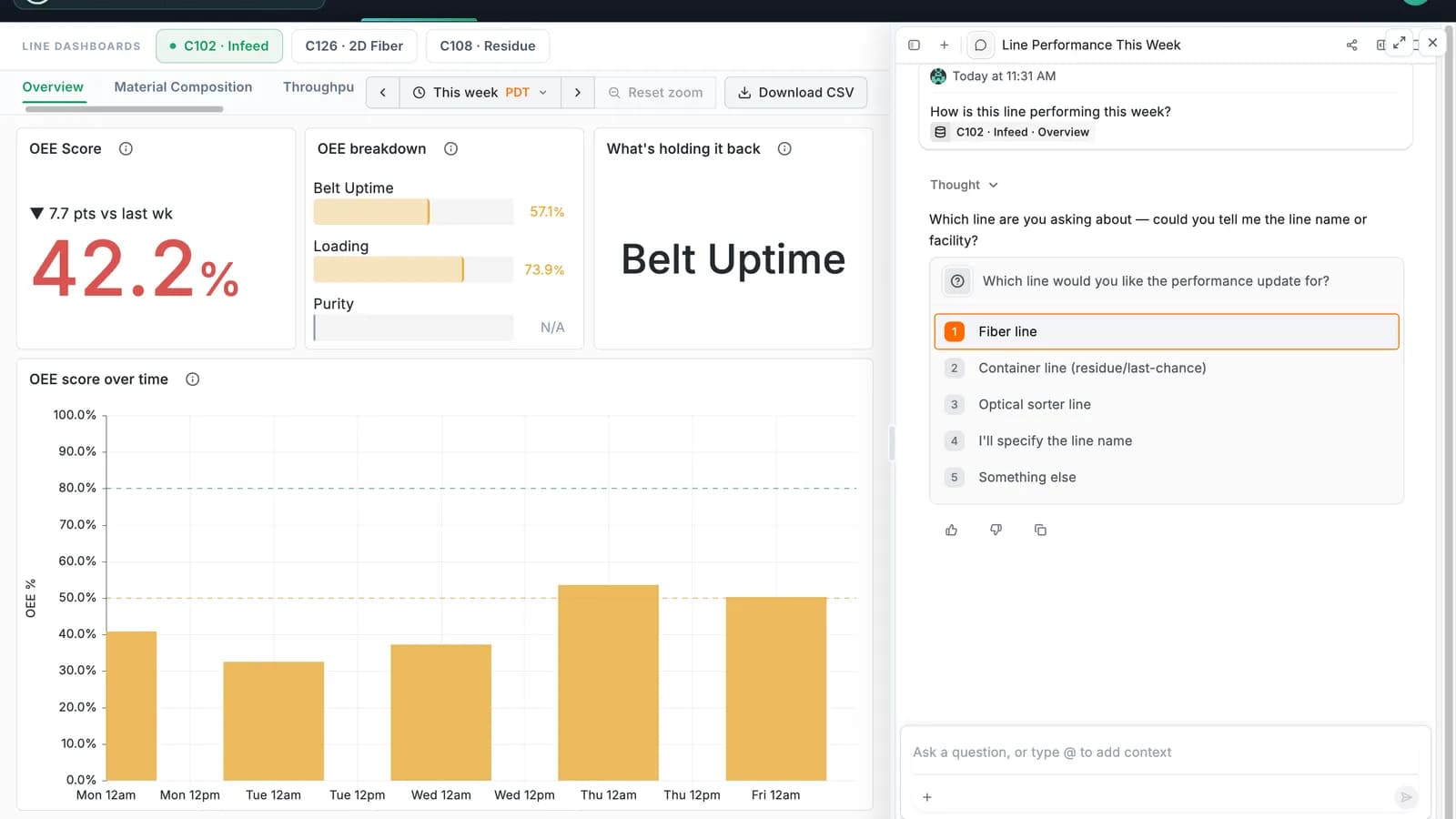
EverestLabs launched an agentic AI platform for recycling facilities, promising up to 20% purity increases and operational efficiency gains.
EverestLabs launched an agentic AI platform for materials recovery facilities (MRFs), promising up to a 20% increase in purity for recycled streams and significant operational efficiencies.
This development directly impacts MRF operators struggling with declining commodity values and increasing contamination rates, offering a new technological approach to optimize sorting and enhance profitability.
AI Agents Drive Purity and Throughput at Recycling Facilities
The new EverestLabs platform integrates AI agents designed to autonomously analyze, predict, and control sorting processes in real-time. These agents monitor conveyor belts, identify material types, and direct robotic sorters with greater precision than traditional vision systems, reducing human intervention and errors.
- EverestLabs claims material purity improvements of 10-20% across various streams.
- The system reportedly processes over 100,000 tons of material per day across its current deployments.
- Initial deployments show a reduction in operational costs by up to 15% due to optimized labor and reduced re-sorting needs.
- The platform aims to recover an additional 2-5% of valuable materials previously lost to landfill.
- Integration is designed to be compatible with existing MRF infrastructure, minimizing capital expenditure for adoption.
Real-Time Optimization and Predictive Maintenance
Beyond sorting, the agentic AI platform offers predictive analytics for equipment maintenance and operational bottlenecks. It anticipates potential machine failures by analyzing sensor data, allowing MRF managers to schedule proactive repairs and avoid costly downtime. This real-time optimization extends to feedstock analysis, enabling facilities to adjust sorting strategies dynamically based on incoming material composition, a critical capability as municipal waste streams become more complex and varied.
What This Means for Recyclers
Recycling facility operators must evaluate AI solutions like EverestLabs' platform to remain competitive. Early adopters stand to gain significant advantages in material quality and operational cost reduction, potentially setting new benchmarks for industry efficiency and profitability. Continued investment in smart technologies will likely dictate future market leadership in a rapidly evolving recycling sector.