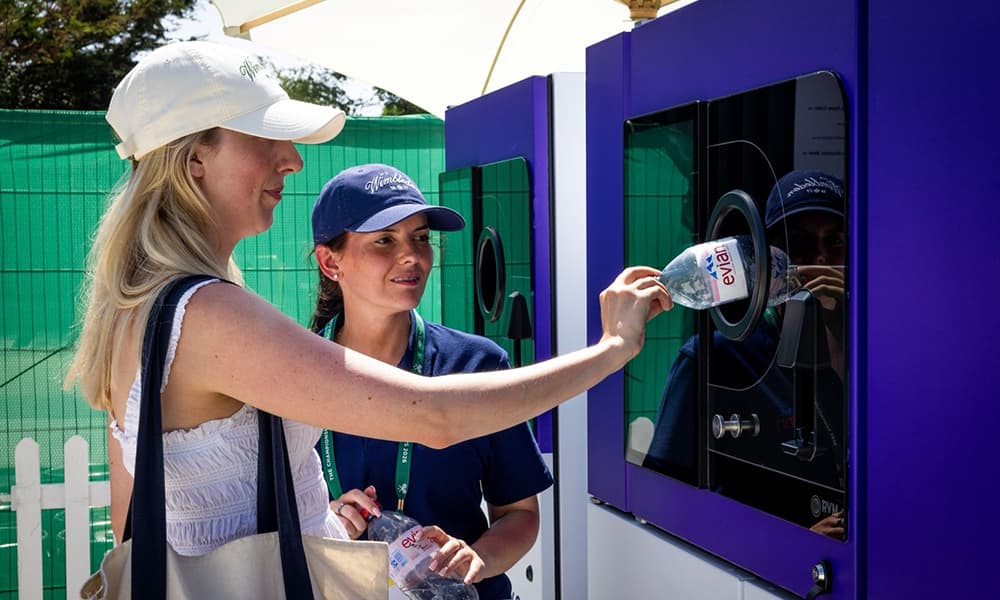
Deposit Return Schemes (DRS) will see 68% of consumers return beverage containers during shopping trips, influencing collection infrastructure.
68% of consumers will return empty beverage containers during their regular shopping trips, according to new research published August 18, 2026.
This high consumer engagement, revealed by a study on Deposit Return Scheme (DRS) participation, signals a significant shift in collection logistics for glass and plastic recyclers, directly impacting material flow and the economic viability of new processing infrastructure as DRS mandates expand across the US.
Consumer Behavior Dictates DRS Collection Infrastructure Needs
The research, conducted by an unnamed independent firm, surveyed over 2,000 adults across regions with established and nascent DRS programs. Findings indicate a strong preference for convenience, with the majority of returns expected to occur at retail locations already frequented by consumers for grocery and other purchases. This centralizes collection points, posing both opportunities and challenges for current recycling operations and reverse logistics providers.
- 68% of respondents confirmed they would integrate container returns into existing shopping routines.
- Only 15% stated they would make a dedicated trip solely for container returns.
- Glass containers showed a 5% higher return intention than plastic bottles when return points were co-located with retail.
- The study projected a 20% increase in return volumes during peak shopping hours (evenings and weekends).
- Retailers anticipate a 10-15% increase in foot traffic at return points, requiring enhanced staffing and automated solutions.
Operational Realities for Material Recovery Facilities
The anticipated influx of returned containers at retail sites directly affects material recovery facilities (MRFs) and reclaimers. While DRS aims to deliver a cleaner, higher-quality feedstock, the logistics of aggregating these materials from thousands of retail locations introduce new complexities. MRFs accustomed to commingled curbside streams must adapt to more uniform, but potentially higher-volume, single-stream material from DRS networks. This could lead to a two-tiered system: one for DRS materials and another for remaining curbside collections. Smaller, regional MRFs without direct contracts for DRS material aggregation may face reduced volumes or pressure to retool for specialized processing, potentially driving consolidation.
What This Means for Recyclers
Recyclers must prepare for a significant reorientation of collection and processing strategies. Investment in advanced sorting technology for DRS materials, particularly optical sorters capable of handling large volumes of PET and glass with high purity, becomes critical. Negotiations with retailers and DRS administrators for efficient, cost-effective transport from collection points to MRFs will be paramount. Companies providing automated reverse vending machines (RVMs) or compactors for retail locations stand to gain substantial market share. Furthermore, the higher quality of DRS-collected material could command premium pricing, but only for recyclers equipped to handle the scale and purity requirements. Failure to adapt could leave operators with diminishing volumes of lower-grade, less profitable commingled feedstock.